July 11th, 2005 Archives
Jul
Special effects for Bollywood sir?
by Sunil Rajguru in Films, Tech Articles
Up close with Hollywood bigwig Barrie Osborne, producer of the Lord of the Rings
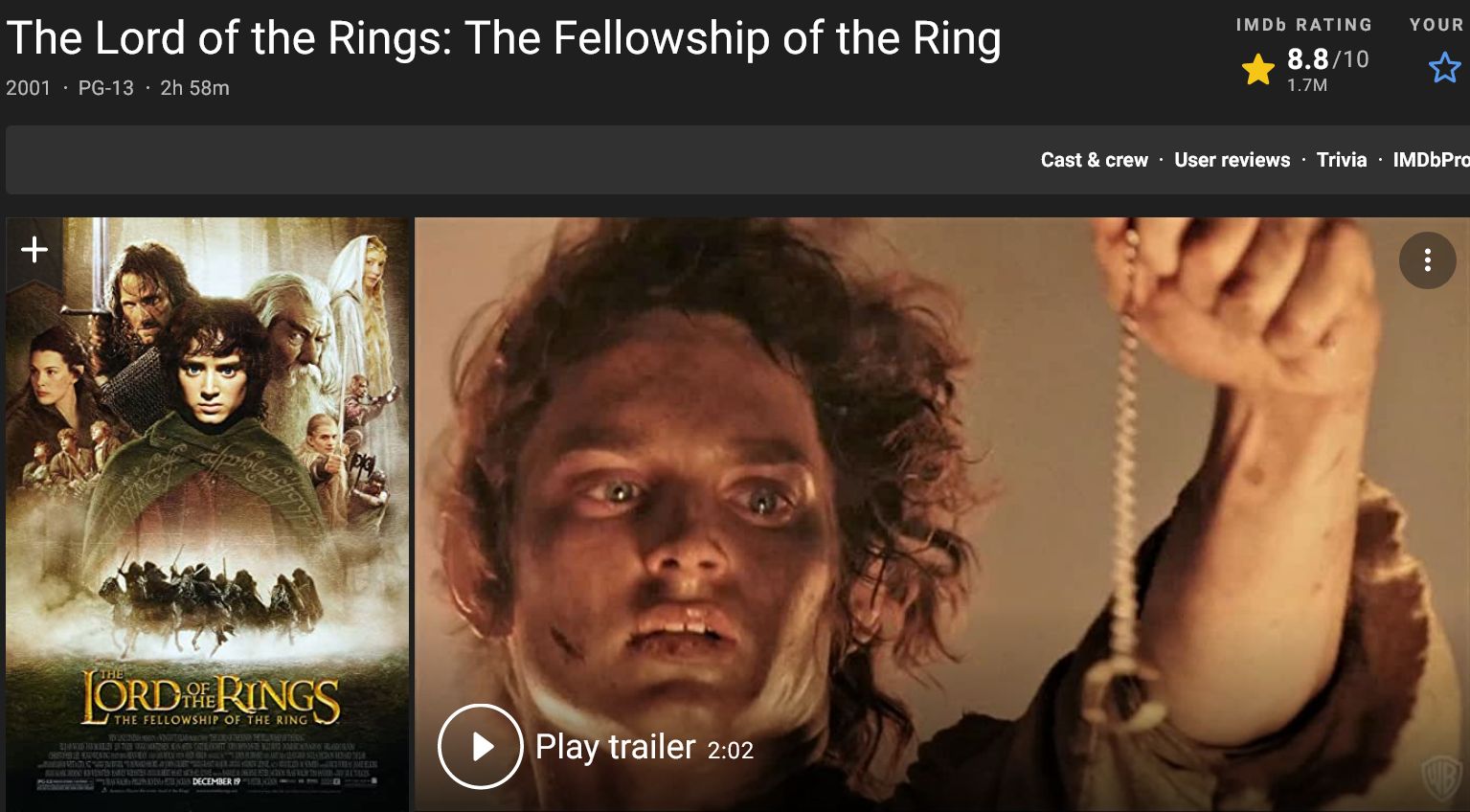
In The Matrix, Neo lives in a com puter-generated world, jumps from building to building and indulges in gravity defying fights. In Lord of The Rings (LOTR), a breathtaking Middle Earth is created along with armies and a computer-generated character called Gollum. Both films had ground-breaking special effects and used technology in a spectacular fashion. And they were both produced by Barrie Osborne, who got an Oscar for the final LOTR: Return of the King.
For Osborne it’s been a long journey from China Syndrome in 1979, where trick photography and scale models were mostly used. So, how is Osborne in real life? Totally down-to-earth person and old-fashioned in a way. No flashy gadgets and no overt dependence on technology in the real world. In fact, he’s left the busy life of the US and decided to settle down in quiet and peaceful New Zealand where the LOTR trilogy was shot.
If you’ve seen That Thing You Do then you’ll remember Tom Hanks who always has a pocket notebook and pen in hand to plan everything. Osborne is more in that mould. He prefers to use a pocket notebook for taking notes and writing his schedule. Why not go in for a PDA to manage all that? To that he simply smiles and remarks, “Oh ya, I have an old HP PDA lying somewhere which I have to update”. The same thing is with other gadgets. “I have an IBM laptop and a Sony Ericsson mobile”. He also doesn’t feel the necessity to be with his laptop all the time. His trusted pocket notebook is enough for all his needs. And what about a home theatre? Well that’s when his eyes really light up. He’s got two home theater systems, which he’s passionate about. That’s a Panasonic 60″ plasma screen with a Sony DLP digital projector.
It goes without saying that movies remain his first passion. Face/Off, Dick Tracy and China Moon are some of the other movies he’s been associated with. He has over 30 years of experience, and he was vice president for Feature Production at Walt Disney Pictures and oversaw around 15 motion pictures. He created a record with LOTR, shooting 3 films in a row, in New Zealand.
Osborne was in India recently to promote animation and films here. He’s convinced that there will be a big shift in the Indian entertainment scene and wants to be where the action is. For one, he’s very keen to back Shekhar Kapur’s Pani, a futuristic movie based in India set in a time period where water will be a scarce element. Special effects will play a big role in that movie. Osborne is also keep on producing Paul Cohelo’s The Alchemist, with a fully “Made in India” tag.
What Osborne believes in strongly is that the Indian animation industry can produce movies in the league of LOTR. For that he’s tied up with Indian visual effects expert, Madhusudhan, who also contributed bits for LOTR 3. Together, they’ve set up an outsourcing studio in Chennai that will compete with the best in the world.
So will we soon see a Matrix out of India? Just watch this space.
(This article appeared in Living Digital magazine in July 2005)
Jul
You@PayPal.com?
by Sunil Rajguru in Tech Articles
Here’s one the easiest ways of sending money to anyone in the world
Transferring money to anyone in the world by shooting off an e- mail? That’s just one of the things you can do with PayPal. No messy FDI clearances and other hassles: Having a PayPal account is almost like having a virtual international bank. You can send and receive money for free, pay for eBay items and even request money for an auction.
PayPal is the worldwide leader in online payments and you can choose to pay using your credit card, debit card or bank account. You can shop using your PayPal with thousands of merchants across the globe.
Currently it has 71 million accounts (ahead of American Express, which has 65 million) and is valid in 45 countries. It’s estimated that more than a third of America’s online shoppers have a PayPal account. Apple’s iTunes store and Napster’s music service both accept PayPal payments.
So how exactly does it work? You give details of your bank account or credit/debit card to PayPal, which first verifies it. After that you can e-mail a payment directly to an online shop or friend, which is immediately debited from your account into the other person’s PayPal account. Money can also be taken out using a cheque.
So what’s the big deal? Well for one, the time spent on an online transaction has been reduced to a great extent and has been made much much easier. Secondly, if you’re a regular online shopper, then you’ve to give out your bank or credit card details to multiple Websites all over, so greater the risk of your information falling into the wrong hands. Here you have to give details just to PayPal and no one else. This is also great news for anyone planning to start an online business. Plus you don’t have to worry about foreign currency conversions, PayPal automatically does it.
You can go in for a free personal account, which will allow transfer of money and online shopping. A premier account is good if you’re a regular buyer and seller. If you’re planning to go in for an online venture, then the business account is the best. You can also go in for the PayPal Buyer Credit, which is a credit card without the card! PayPal was acquired by eBay for about $1.5 billion in 2002. Today, it’s estimated that PayPal is worth more than $6 billion.
But PayPal accounts have been the biggest targets for phishers, who try to get information to siphon off the accounts. One phishing scam asked PayPal users for their password, e-mail and postal addresses, credit card and phone numbers, ATM code, social security number, birth date and even mother’s maiden name for an “alleged” update. The worst part was that many users gave so much sensitive information willingly without thinking why they should give so much for just an update. Also PayPal says that their e-mail are personally addressed to their customers, so a “Dear Paypal user” type of mail should arouse suspicion.
One against many: Frequent online shoppers have to give out sensitive information to many sites. With a PayPal account, you don’t have to give out any information for the transfer of money. All transfers take place by just sending an e-mail.
With a Paypal account you can…
• Send and receive money to anyone in 45 countries with just an e-mail for free.
• Shop on eBay and other shopping sites. Get a free virtual credit card.
• Buy songs from the iTunes store for your iPod.
• Buy and sell on the Internet under your own name for a small fee.
• Set up an online business with options to send e-mail invoices to your customers.
(This article appeared in Living Digital magazine in July 2005)
Jul
GPS for All reasons
by Sunil Rajguru in Tech Articles
Did you know GPS could be used for paying bills, remote controlling your car, tracking buses and containers and even for sport? Find out about its out-of-the-box applications
We know you’re overspeeding
GPS tracking is very popular in fleet management. Many companies have fitted all their trucks or buses with tracking devices. That means thousands of vehicles can be monitored from a single computer. Their position and speed can be seen at all times. What’s more, SMS and computer alerts can be got if any vehicle overspeeds or stops too long at a particular place. At the same time, the vehicles can press an emergency SOS button at any time in case of a problem. Tracking can also be put on containers and monitored as they are shipped all across the world. In many cases data can be stored for months on end. If the tracking device is attached to a ship, then an SOS alert can be sent if it starts sinking. It does this on seeing if the water level at the base of the ship goes below a certain level.
Goodbye to the water inspector
A GPS device can be integrated with any type of machine. So a little known fact is that GPS devices can be attached to gauges like those related to water or electricity or gas. After that they can be read and inspected at a remote location. That does away with the physical need of checking and inspecting. In fact when the required device is fitted, the readings can be monitored on a regular basis and bills can be sent out automatically to the person. Tampering of the above is also very difficult. It can be attached to any type of utility meter.
Your car’s remote control
Apart from car navigation, for practically every parameter in the car, you can connect a GPS device for alerts. For example, is the door open or closed? What’s the engine temperature? What’s the fuel status etc? So if a thief steals your car, the GPS device will alert you the precise location and speed of the car. You’ll also know the status of the fuel, what music he’s listening to and all other sundry details. But the fun starts here and you can actually disable all the controls for him and take control of the car! You’ll be able to drive it like remote control. But all you’ll have to do is simply disconnect the fuel connection and the car will come to a grinding halt. Set the car alarm after that. Howzzat?
To see without seeing
There are many GPS-based tools for the visually impaired. The BrailleNote GPS is a PDA device that tells the person where he is and can direct the person to a particular point of interest, like a restaurant or airport. The Victor Trekker, on the other hand, has talking maps and menus. The visually impaired person can get navigation info and create routes. Plus there’s a comprehensive searchable database full of airports, restaurants, hotels, stations etc. The experimental NOPPA project of Finland was designed to help visually impaired pedestrians through a network of roads, trains and trams. The Brunel Navigation System for the Blind is also an ambitious project that aims to integrate GPS positioning with GIS, an electronic compass and a remote vision (wireless digital video transmission) with an accuracy of upto 4 metres.
Cache ‘n dash
For all of you who have enjoyed a good treasure hunt, imagine one spread across all over the world to be searched with a GPS device? That’s geocaching. In this sport, a geocache is placed anywhere in the world and can be found out through a GPS device and the Internet. This is how it works. A person places a geocache generally in a waterproof container with a logbook and certain “treasures”. The coordinates are then put out on the Internet and can be sought out by anyone. A player then will use a GPS receiver to find it. They can then claim the treasure, put their exploits in the logbook and if they want, put different treasure and get someone else to find it. Now if you don’t think this isn’t adventurous enough, then some geocachers place the treasure deep under water, on high mountain peaks and even in Antarctica! It’s estimated that more than 150,000 geocaches have been put out all over the world. For those interested, check out www.geocaching.com. In geodashing, waypoints or “dashpoints” are randomly selected all over the world. Then teams, which reach the most amounts of dashpoints in the allotted time, win.
Duped no more: Call centers in India had to take the word of taxi services regarding distance traveled and petrol consumed for bills related to employees’ night drops. That was till they took to GPS tracking devices. So how does that work? Well, small tracking device are attached to all the taxis and after that they can be tracked all the time. The devices will tell a computer the exact distance covered and amount to be paid on a per kilometer basis.
What’s GPX? GPX stands for GPS eXchange Format. It’s an XML format used for transferring GPS data between different software applications. This basically means it’s a common standard to facilitate GPS data transfer. If someone has some GPS data, he or she can put it up on the Web, you can search and find it and have it read by your GPS device. Useful for tracks, routes and waypoints.
Out of India: m-Trak is a popular tracking device used in India by many trucking, taxi and emergency services. Brought out by MobiApps, it’s a comprehensive fleet management solution. It allows a company to track and manage mobile assets, which could be trucks, cars or even containers. A centralized command simultaneously keep track of thousands of vehicles, including location, speed and stoppage time.
(This article appeared in Living Digital magazine in July 2005)
Jul
Play safe in cyberspace
by Sunil Rajguru in Tech Articles, Virtual World
There are many prowlers out there on the Internet who want to steal your personal information and cheat you or simply irritate you. Here’s how to take guard against them
Phishing: Don’t bite the bait
While the term “phishing” was coined in the Nineties when hackers tried to steal AOL accounts, it has gained infamy of late. Today a hacker will spoof a URL of say a banking site and send you a harmless-looking e-mail, directing you to that spurious site. When you go there, all the information which you key in like user name and password will be captured by the spoof site. So it’s always better to go directly to a bank or company’s official site. Also be wary if a URL has the “@” symbol.
In 2003, in the famous e-bay phishing scam, users received a mail telling them that if they didn’t click a particular link, then their accounts would be suspended. Always call or check with the official Website if you get such a message.
SPAM: Stupid Pointless Annoying Messages
Spam is the biggest problem that all of us face in cyberspace every day. What started of as an unsolicited commercial e-mail, has become one of the biggest nuisance values today. So how does one stop being at the receiving end? The first is to put a spam filter, available with most e-mail clients. You can even download free software for the same from the Web.
Secondly, beware of putting out your email in discussion forums and comments columns. Many spammers simply harvest e-mail off the Internet. Never make the biggest mistake of replying to spam. If you do that, then you’re really opening the floodgates to spamming. For then, the spammer will know that yours is a valid e-mail ID. Finally always report all spam messages through your email client in an effort to get the spammer blocked out for good.
And also, this is where multiple email IDs help. You can keep one for just your friends and a different one for official stuff. Also, when you are sending forwards or bulk mails it’s better to bcc to all, rather than cc. If you respect the privacy of other people’s email IDs, then they will respect yours.
Salami Slicing: A bit at a time
Salami slicing is when somebody steals a very small amount from your bank account. Usually, the last two digits (cents in the case of America) are rounded off. Mainly done by employees of a financial corporation and people have been known to accumulate those tiny amounts into sometimes millions of dollars. The salami-slicing program will round off the amount from the transaction and transfer the amount to a hidden bank account. This is very hard to detect and the most you can do is check your bank statements more carefully. Salami slicing first appeared in the Hollywood film Superman 3, in 1983.
Identity Theft: Is that you?
When multiple and false identities are common, can identity theft be far behind? Identity theft in the real world was when someone assumed one’s identity to steal their money or frame them for a crime. Identity theft in cyberspace is much much easier to do. So always make sure you are on your guard. During transactions, check if you’re on the Secure Sockets Layer (SSL). You can do this by seeing if the http has changed to https in the URL. There should also be a small lock icon in the status bar at the bottom of the browser window. You can also check for digital certificates like VeriSign. And after you’ve done the transactions, check your e-mail for confirmations.
Also don’t put out too much personal information on the Net. It could be collected, put together-result, you could be impersonated.
Spim: Yes, it’s spim
Spim is spam during instant messaging. Some instant messaging systems maintain a directory of users, which spammers get hold of and then bombard IM users with spim. This is much more annoying than spam, because a pop-up window opens in your screen and it currently has a bigger growth rate than spam. However, experts say this will never become that big a problem. For one, unlike e-mail, IMs have a restricted buddy list, and you can easily block other users. Second, it’s difficult for a spammer to physically sit and type that fast to send out stuff as fast as an e-mail spammer can do.
Many of us are careless in cyberspace because it’s a virtual world, but the problems can spill into the real world, so be on guard all the time.
(This article appeared in Living Digital magazine in July 2005)
Jul
Have you been tagged yet?
by Sunil Rajguru in Tech Articles
While more and more products are getting RFID tags, the final product to be tagged could well be you!
Imagine a day when a baby is born and a tiny RFID tag is placed in side his shoulder. That tag is its identification and as the baby grows up, all the personal details, school records and medical records are linked from the tag to a database. When he starts working, he can link his credit card to his tag and use it to shop, travel and spend his money all over the world. Sounds far-fetched? Think again.
Last year, the American FDA made a landmark decision. They approved the use of RFID tags on humans for medical purposes. Since then more then 1,000 people have been implanted with chips that can be placed just below the skin. In some cases, the chip has been implanted on a patient’s shoulder. This helps hospital staff access the person’s medical history in case of an emergency. It’s a painless process and the tag becomes a part of the body without any adverse reactions.
In Barcelona’s exclusive Baja Beach Club VIP customers are RFID tagged and use it to pay for their drinks. No bills and no credit cards. The money gets automatically transferred from the VIP’s bank account to the club’s account. In Mexico City police officers are tagged. This helps them access police databases. Also, if they’re abducted, then the police department will easily be able to track them. And it’s not limited to cops. Prisoners in the US are being tagged too. In some facilities in California and Illinois, prisoners wear transmitters that resemble a wristwatch. Authorities know where all the inmates are all the time. And when a prisoner tries to remove the tag, then it sends out an alert too.
While, in some cases all this might come in very handy, it would also be theoretically possible for a third party to trace the person and get confidential information about him. That has raised many issues of privacy. Moreover, it’s also possible for someone to find out where you are if you’ve bought a product that has an active RFID tag. So much so that it prompted a US Senator to say during a hearing: “How would you like it if, for instance, one day you realized your underwear was reporting on your whereabouts?”
So how does it all work?
These tags are nothing but “smart bar codes” that can talk to a network. While bar codes are a one-way street, the RFID tag is more “interactive”. This, thanks to a tiny silicon microprocessor that it has. While tagging of humans is still a very small percentage of all RFID tags, the biggest market currently is for products of high worth. Currently companies have managed to make a tag less than a dollar, so till the price is brought down even further, it will not be successful on the smaller products.
If a product is tagged, then it’s easier for a company to trace millions of products and manage them: right from the factory to the shops to which city they were being used right to the dustbin. It’ll be helpful during shopping too. With bar code you need a bar code reader to be physically in proximity with the product. And after the billing, the utility is usually over. Not so in the case of an RFID tag. In a fully RFID stocked supermarket, you would be able to put everything in a cart and walk out of the door and have the money for all the items directly deducted from your bank account.
RFID tags are already being used in large numbers for animal identification, anti-theft systems, container, truck and airline baggage tracking. Companies are planning to use tags on their assets in an effort to maintain them and prevent theft. All the major credit card companies are also planning what they call “contactless payment” cards this year itself.
Banks are particularly interested in using tiny tags during movement of bulk money. They would be hidden in such a manner that potential thieves would find it very difficult to find them and hence be trackable. Even putting an RFID tag on every currency note is an option that’s being explored, though that’s a long way off.
While the benefits of RFID tags are immense, the biggest deterrents are “privacy concerns”. The future will tell whether the common public will reject RFID tags or they will become as commonplace as mobile phones.
(This article appeared in Living Digital magazine in July 2005)
